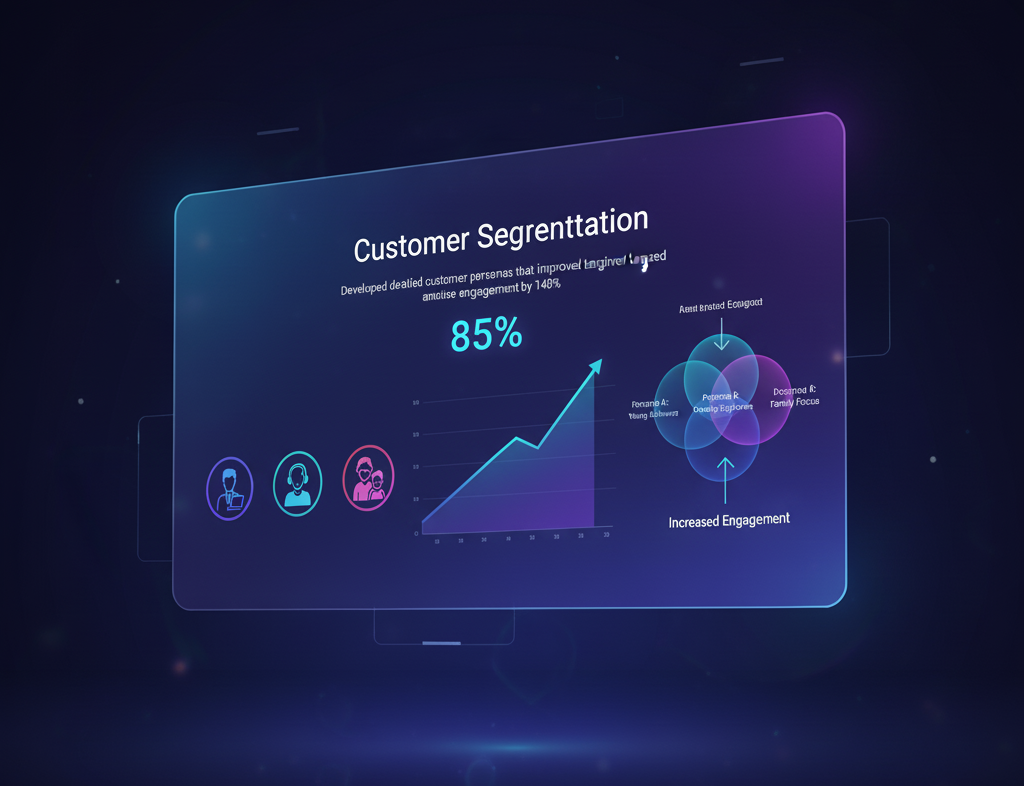
Sending the same message to everyone is the fastest way to waste your budget. We break down how proper customer segmentation transforms campaign performance.
The single biggest reason ad campaigns underperform isn't the creative, the platform choice, or the budget. It's that the same message is being sent to people with fundamentally different needs, intentions, and stages of awareness. Audience segmentation fixes this — and the performance difference between generic and segmented campaigns is not marginal.
Why one-size-fits-all fails
Imagine you run a B2B software company. Your potential customers include: a 23-year-old startup founder trying to get their first few clients; a 45-year-old operations director at a 200-person firm looking to replace legacy systems; and a procurement manager at an enterprise business who needs to justify the purchase to a committee. These three people have nothing in common except a potential interest in your product.
A single ad message written for one of them will feel irrelevant, pushy, or confusing to the other two. You'll pay for the impressions on all three, but only one might convert — and even then, only if you happened to pick the right message. Segmentation lets you write the right message for each audience.
Four segmentation dimensions
| Dimension | What it means | Example |
|---|---|---|
| Demographic | Age, gender, job title, company size | "SME owners in the UK, 30–55" |
| Behavioural | Website visits, past purchases, content consumed | "Visited pricing page but did not enquire" |
| Psychographic | Values, goals, pain points, motivations | "Wants to look credible without a big budget" |
| Purchase stage | Where they are in the buying journey | "Never heard of us" vs "Ready to buy" |
Most businesses start with demographic segmentation because it's the easiest data to collect. But behavioural and purchase-stage segmentation tend to have the biggest impact on conversion rates, because you're targeting people based on what they've actually done — not just who they are.
Practical implementation
For Google Ads, use different ad groups for different keyword intent levels — informational queries ("how to improve website traffic") need educational content, while transactional queries ("hire digital marketing agency London") need conversion-focused pages. Don't send both to the same landing page.
For Meta Ads, the most powerful segmentation approach is creating custom audiences from your CRM or website visitors, then building lookalike audiences from your best customers. A lookalike audience of your top 10% of clients will outperform a broad interest-based audience almost every time.
Common mistakes
- Over-segmenting — creating 50 audience segments when you only have the budget to serve 3 well
- Ignoring the purchase stage — sending a hard sell to someone who has never heard of you
- Segmenting but not adapting the message — different audiences, same ad copy (defeats the purpose)
- Not refreshing segments — buyer behaviour changes; segments built 12 months ago may be stale
Key takeaway
Segmentation doesn't have to be complex to be effective. Start with two or three clearly different audience groups — perhaps new prospects, warm leads who've visited your site, and past customers. Write genuinely different messages for each. Test and refine over 4–6 weeks. The performance improvement will almost certainly justify the extra work.
Ready to put this into practice?
Get in touch and we'll apply these principles to your specific business.
Get in Touch